January 26, 2025 · PE+ Resources
Injury Prevention: Technique, Recovery, and When to Modify Workouts
Teach injury-prevention habits through technique, gradual progress, recovery, and clear decisions about modifying activity.
No warm-up or technique cue can guarantee that an injury will never happen. Prevention is better understood as risk management: create a clear space, teach a manageable movement, progress gradually, and respond when something feels wrong. This message is especially important for students, who may try to hide discomfort because they want to keep up with friends.
Start with the environment
Check surfaces, boundaries, footwear expectations, equipment condition, and the traffic pattern before activity begins. Demonstrate where students wait and where they return equipment. A station that is technically well designed can still be unsafe if groups cross paths or if the next student starts before the area is clear. Setup guides and a short visual cue can make these expectations easier to repeat.
Use technique as a conversation
Teach one or two cues that support the movement: soft landing, eyes up, stable base, or controlled finish. Demonstrate an easier variation first so students can feel the goal without rushing. Ask what changed when the movement became quieter or more balanced. Technique is not a demand for identical bodies; it is a way to help each student find a repeatable option.
- Progress distance, speed, resistance, or volume one step at a time.
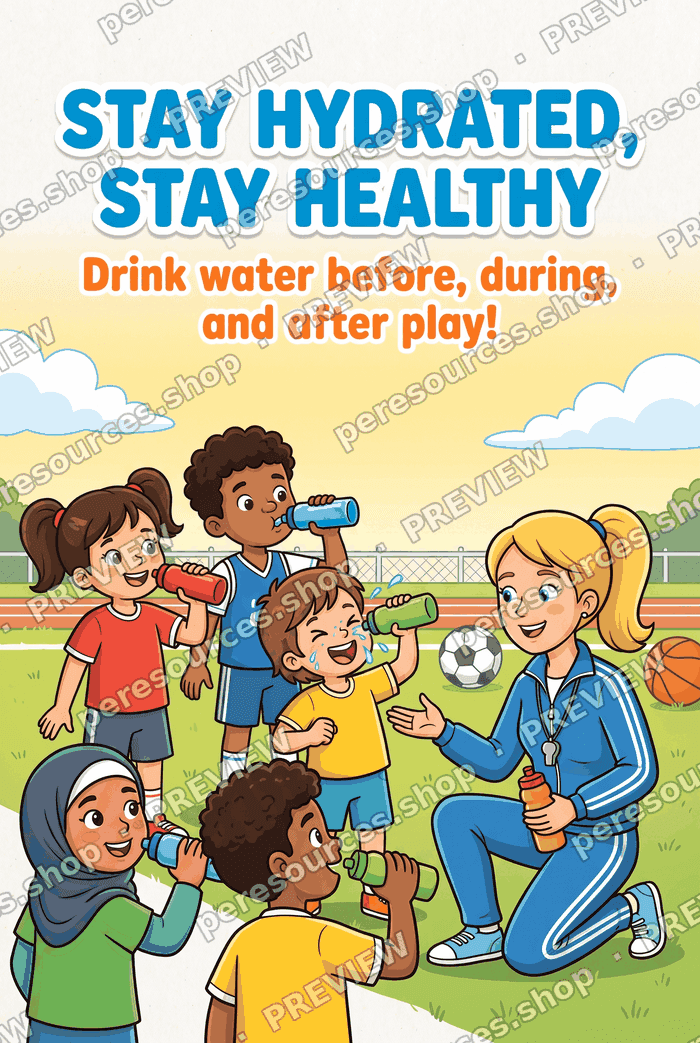
- Build rest and water breaks into demanding sessions.
- Offer alternatives for impact, balance, range, and equipment access.
- Stop and involve the appropriate adult for pain, dizziness, or unusual symptoms.
When should a workout change?
Modify a task when a student cannot maintain control, reports pain, feels unwell, or shows a change such as limping. A modification might mean walking instead of running, reducing range, using a wall for support, or changing the role to an observer or coach. The student should not be shamed for choosing it. Follow the student's medical plan and school procedures, and do not diagnose the cause of a symptom.
Recovery is prevention too
Students need sleep, food, hydration, lower-intensity days, and time away from repetitive tasks. A class can teach recovery by finishing with a calm transition and asking students to notice their effort. More training is not always better training. Fitness Circuit Stations can rotate movement patterns so one area is not overloaded, and warm-up cards can help teachers vary the entry routine.
Teach students a simple decision sequence: pause, notice, modify, and tell an adult when needed. Pausing prevents a rushed reaction; noticing identifies pain, fatigue, or loss of control; modifying keeps the learning accessible; and telling an adult brings support. Rehearse the sequence during ordinary lessons so students know it is a normal part of participation, not a sign that they have failed.
Injury prevention is a culture of attention. Students learn to prepare the space, choose a level, communicate early, and support a classmate's modification. Those habits are more durable than a single rule because they help students make safer decisions wherever they move.