February 10, 2025 · PE+ Resources
Goal Setting With SMART Goals for Fitness Students
Help PE students write SMART fitness goals that are specific, measurable, realistic, relevant, and time-bound.
Goal setting works best when students can see the connection between a goal and an action. “Get fit” is a reasonable hope but not a useful plan. A SMART goal gives students a way to define what they will practice, how they will notice progress, why it matters, and when they will review it. The process should feel encouraging, not like another way to judge bodies or athletic history.
What SMART can mean in PE
- Specific: name one behavior or skill, such as steady pacing or controlled landings.
- Measurable: choose an observation, count, time, or reflection prompt.
- Achievable: match the goal to the student's current experience and schedule.
- Relevant: connect the goal to a class, activity, or personal reason for moving.
- Time-bound: set a review date, not a permanent promise.
Turn a broad idea into an action
A student might begin with “I want to run faster.” Ask what they want to practice and what would show progress. The goal could become: “For the next three weeks, I will use a steady first lap and record how my breathing feels after each run.” Another student might choose: “During our circuit days, I will practice two controlled push-up variations and write one form cue after class.” Both goals are meaningful because they describe choices the student can influence.
Let students choose the marker
A number is not the only measure. Students can track smoother technique, a longer continuous effort, more confident participation, or the ability to recover and try again. Give a menu of markers and discuss which one fits the goal. If a student has pain, a medical restriction, or a changing schedule, the goal should be adapted with the appropriate adult rather than forced.
Build in review moments
Review goals briefly once a week. Ask what happened, what helped, and what needs to change. A goal can be revised without being called a failure. Maybe a student set a frequency that conflicts with family responsibilities, or an exercise variation was too difficult to repeat safely. Changing the plan is evidence of problem-solving and ownership.
Use peers carefully
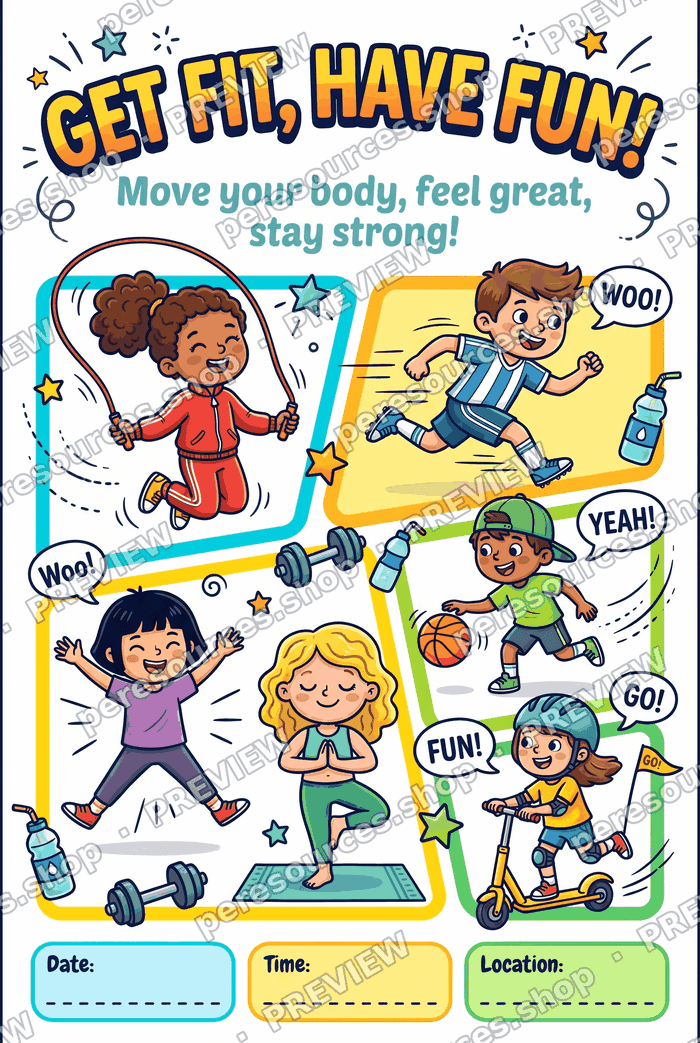
Partners can encourage and ask questions, but students do not need to share private goals or scores publicly. A class can celebrate strategies: planning a warm-up, choosing a walk break, or practicing a cue. Athletics and circuit lessons provide natural opportunities to test a goal, while a short poster prompt can remind students that progress has more than one shape.
The best SMART goal is small enough to start this week. Help students name an action, notice evidence, and choose the next review date. Over time, that cycle teaches a durable fitness skill: the ability to make a plan, listen to the body, and adjust with confidence.